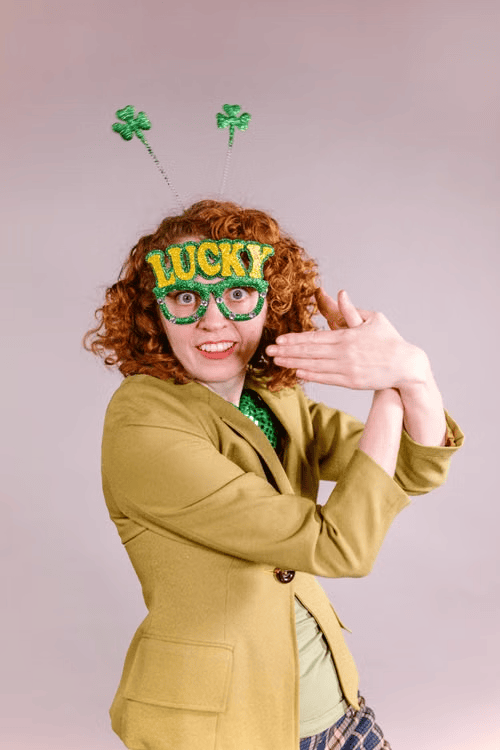
A woman with lucky glasses and clover headgear – Pexels
Luck is a determining factor in so many parts of our lives. A somewhat nebulous concept, it’s one that has been viewed in a wide range of ways over the years – some people think themselves inherently lucky or unlucky, others believe luck can change based on what you do and how you do it, and still others don’t really believe in luck at all.
But whatever your feelings on the overall concept of luck, there can be no disputing the idea that a whole lot of our games are based around this very notion: the universe decides. So, let’s start to uncover that in terms of sweepstakes and other games.
How Do Sweepstakes Work?
By definition, sweepstakes are determined by luck, with no skill being involved. The word is etymologically clear: the winner “sweeps” (or takes) all the “stakes” (or prizes). Many different companies use sweepstakes for promotional purposes, encouraging people to engage with their brands and connect with their companies. Restaurants, drinks manufacturers, and more often turn to these as a way of building relationships and gaining attention from potential customers.
Prizes are often small, but in some cases, the top prize will be a large and attractive one, drawing people’s attention to the contest and encouraging them to enter. Participants will be randomly assigned an entry, and there may be multiple winners, although there does tend to be one major prize. Luck is the sole determining factor of these games: once somebody has entered, they have as much chance of winning as any other entrant. Nothing they do can change their odds.
How Do Other Luck-Based Games Work?
Some luck-based games introduce other elements of skill or decision-making into the process to increase the audience’s engagement and encourage them to play the game. How much weight is given to luck and how much to skill will vary depending on what kind of game is being played.
If you open a Bitcoin casino, you’ll quickly see what we mean. Games like poker carry a luck component in terms of the cards dealt, but there’s also a significant amount of skill in how players handle their cards, how they bluff, how they read other players, and more. Blackjack similarly has a luck component, but again, the player can improve their odds by playing strategically and making good decisions.
Turn your eyes to a game like slots, however, and we’re back to pure luck: most slots games have no way for players to influence outcomes, and you simply click a button, watch the reels spin, and hope luck is on your side. Slots are one of the simplest games to learn how to play as a result and most can be picked up in a matter of minutes.
And, of course, there are many other titles that have different balances of luck and strategy, attracting different kinds of players as a result. For instance, crash games are predominantly luck-based, but players do still have a decision to make in terms of when they choose to stop the game; waiting too long results in a loss, but ending too early results in a very small win. This introduces more player control, although it’s close to slots in terms of its randomness.
But Why The Luck Component?
You might notice, though, that although we’ve listed quite a few games that are pure luck, we haven’t listed any that are pure skill. These games certainly do exist, but they’re less common than you might think! In fact, it’s quite unusual for games to be exclusively skill-based because this can make them too predictable.
That’s an interesting concept. A game that’s exclusively luck-based won’t appeal to all players, but it tends to have more widespread popularity because it offers uncertainty, the thrill of the unknown – while a game that is exclusively skill-based often has a smaller following because it’s really just about who can maximize the strategy, and that tends to get repetitive after a while.
That’s why sweepstakes, card games, board games, dice games, and video games almost all include at least a degree of randomness; this provides the game with unpredictability that keeps people coming back again and again, and it offers a level of satisfaction that pure strategy games tend to struggle to capture. When you know exactly what’s going to happen, all the mystery and intrigue is lost. When you know what might happen, but the outcome can be affected by chance, you’re encouraged to keep playing to see how things unfold. And when you have no idea – well, just look at how popular lotteries, sweepstakes, and slot games have become to understand why this continues to appeal to people everywhere.